Monet-Inspired Studies: A Dedication
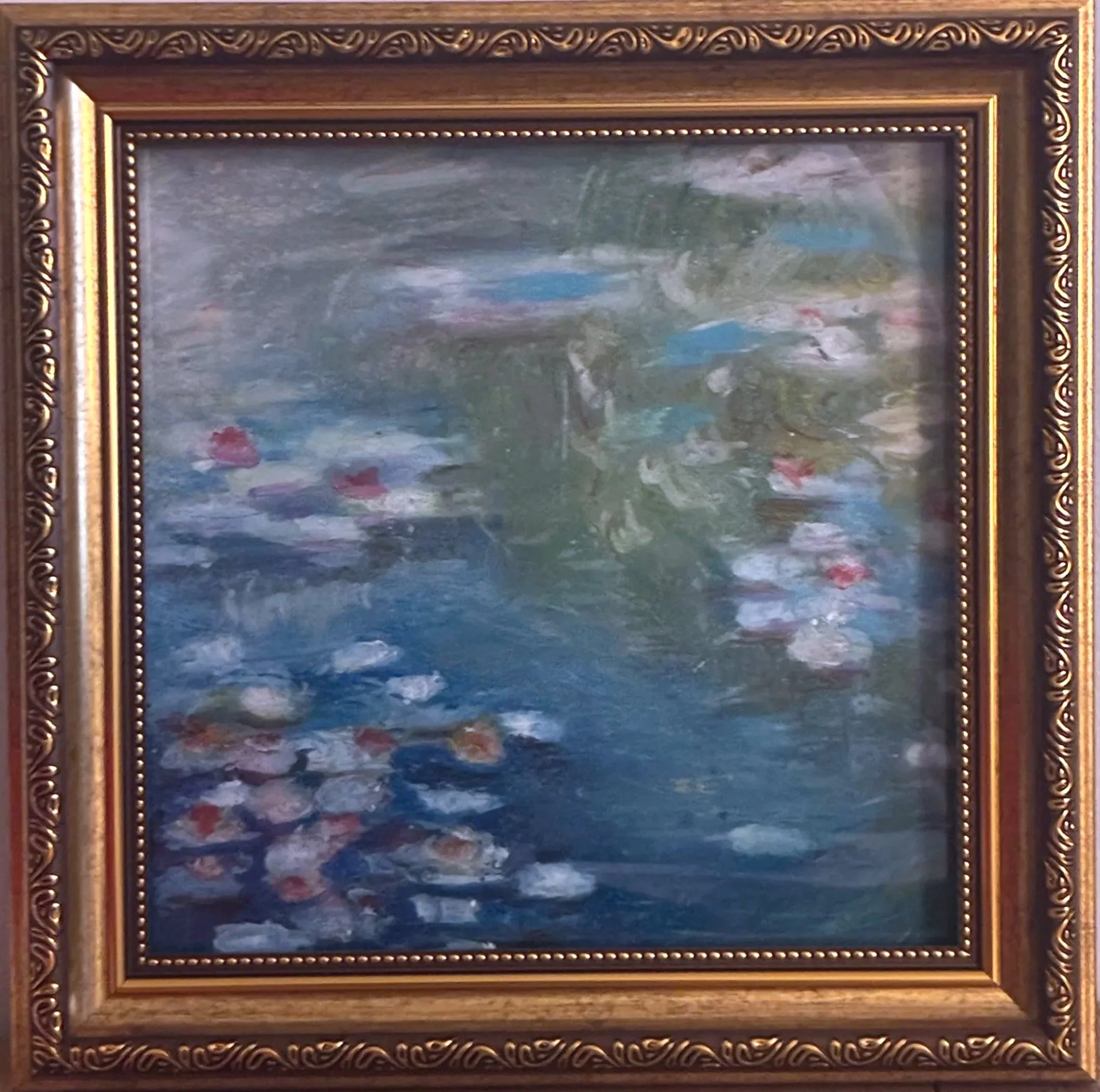
Water Lilies (Monet, 1906). My first shot at oil pastels was a rendition of Claude’s most famous paintings. It doesn’t come close, but it shouldn’t. For N.M., who is like a mother to me, and, Rhett.
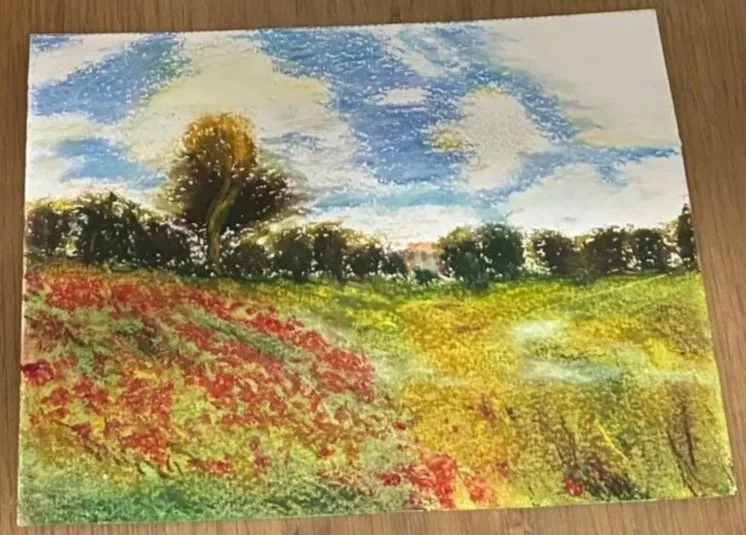
Poppy, my sister’s daughter, turns one this year. I drew this for her. The Poppy Field near Argenteuil by Monet (1873) portrays four people walking through the meadow. Instead of including them, I wanted Poppy to emerge as a seedling—the one we watch take root and blossom. Like a flower among flowers, she becomes the garden itself: not someone merely observed within the landscape, but the reason we stop to look and admire.
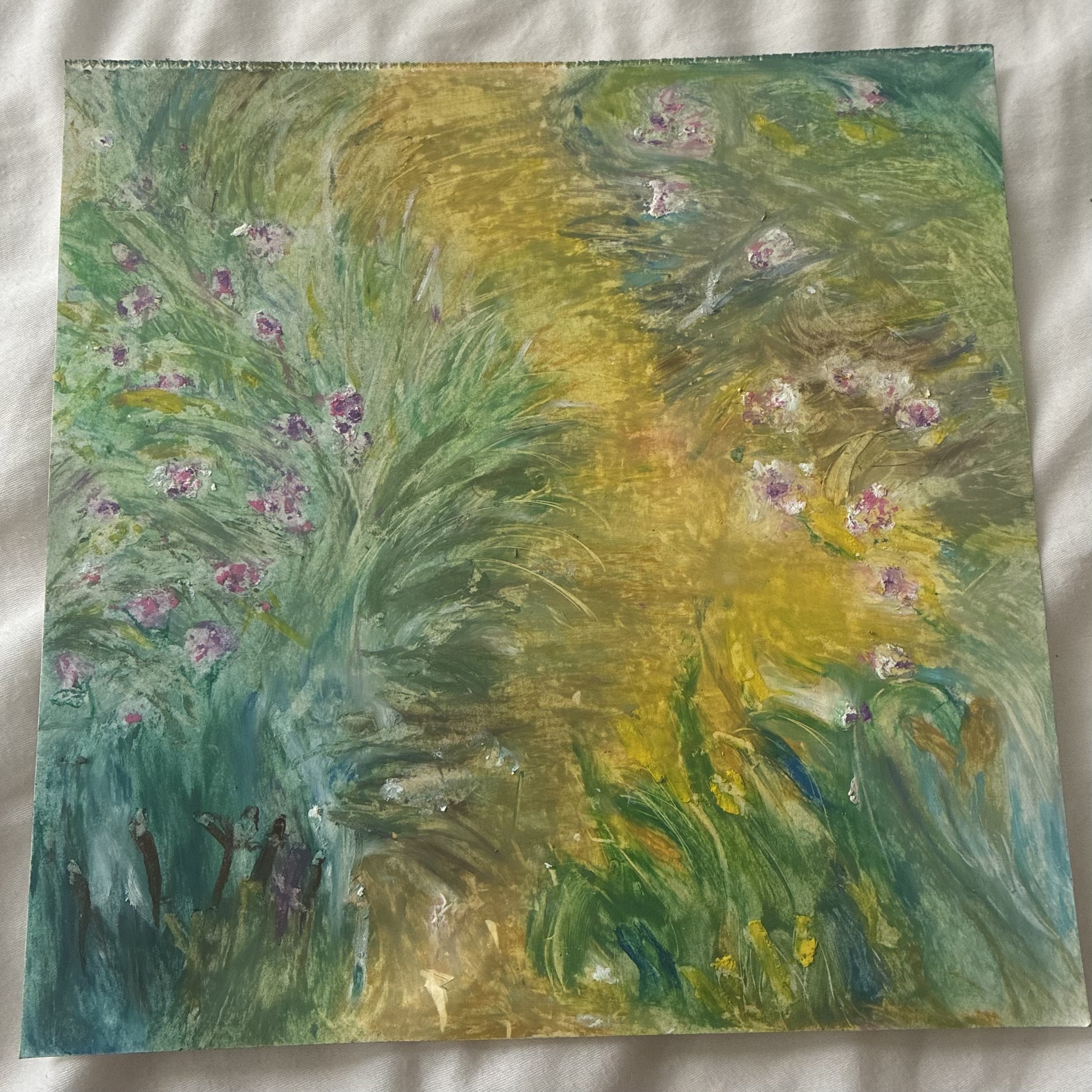
The Path through the Irises (Monet, 1914-1917), reimagined. To M.T., a love I follow.
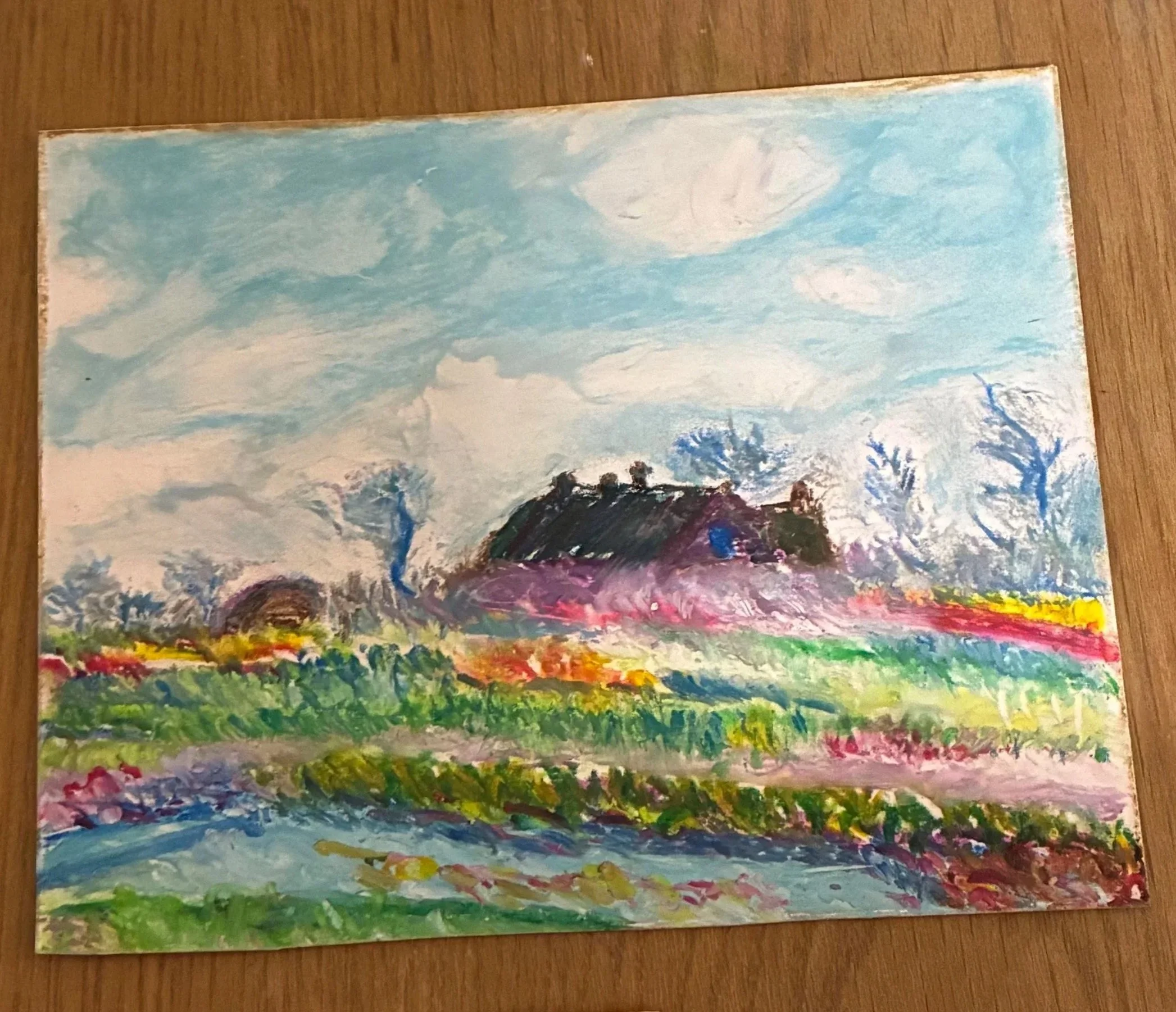
This drawing brought out my inner child. I felt like a toddler who colors outside of the lines. Like the rest of my artwork, this pales in comparison to the original which is Tulip Fields at Sassenheim, near Leiden (Monet, 1886). Irregardless, I was inspired by my oldest sibling, a visionary and painter, who taught me the magic of pencil and paper when I was little.
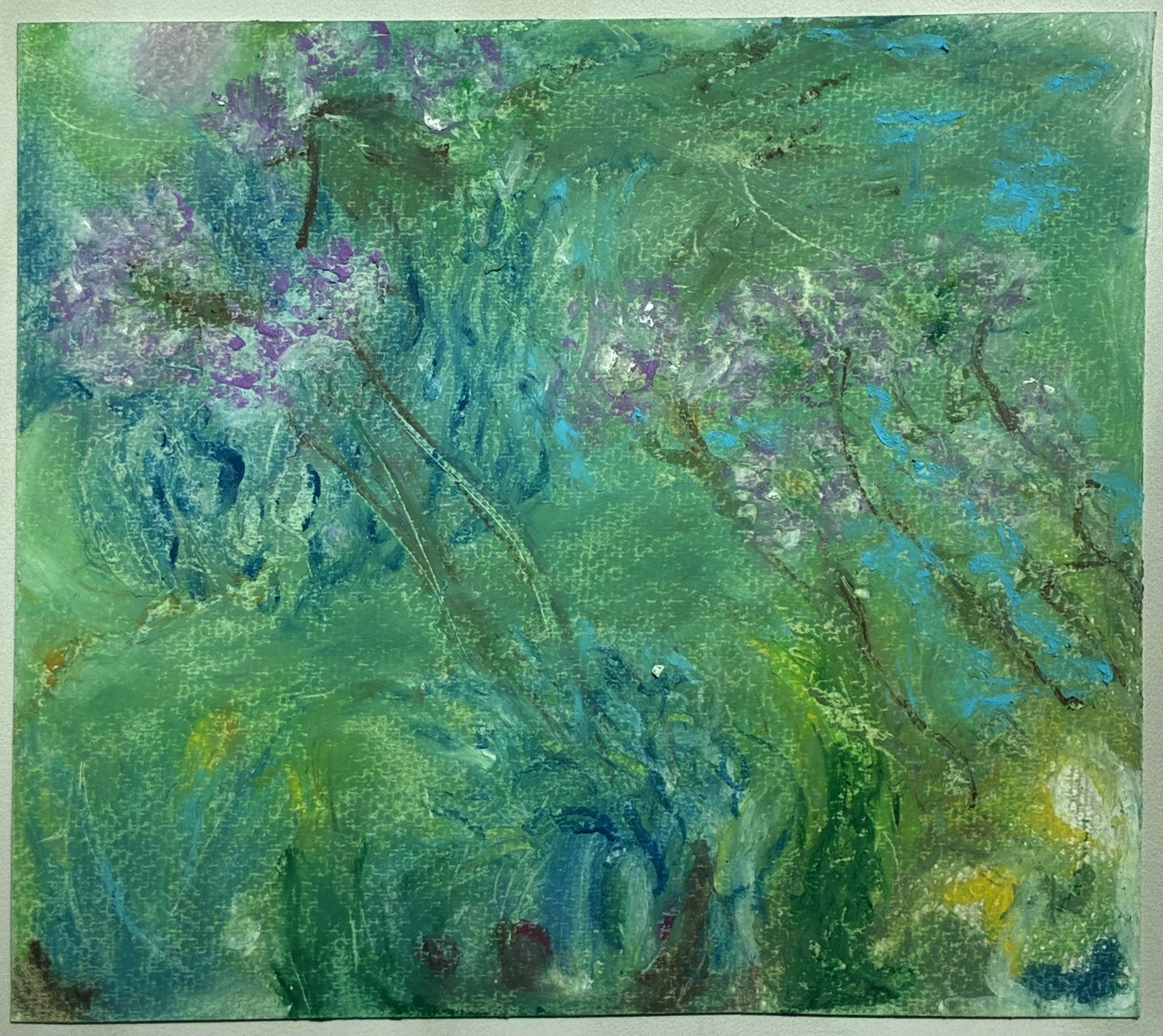
Housed at the MoMA in Manhattan, my second time painting Monet’s Agapanthus (1914-1926)— a plant native to Africa— is dedicated to several people, “Ee Gee.”
References:
Monet, C. (1873). The Poppy Field near Argenteuil [Painting].
Musée d'Orsay, Paris, France.
Monet, C. (1886). Tulip Fields at Sassenheim, near Leiden [Oil on
canvas]. Sterling and Francine Clark Art Institute,
Williamstown, MA, United States.
Monet, C. (1906). Water Lillies [Oil on canvas, three panels]. The
Art Institute of Chicago, Chicago, IL, United States.
Monet, C. (1914-1917). The Path through the Irises [Oil on
canvas]. The Metropolitan Museum of Art, New York,
NY, United States.
Monet, C. (1914-1926). Agapanthus [Oil on canvas]. The
Museum of Modern Art, New York, NY, United States.